

Whoa!
Phantom is slick, fast, and honestly kind of fun to use.
It fits into my browser like it was made for it.
At first glance it feels minimal, almost too simple.
But when you dig into its DeFi integrations and token handling, there are layers, and some tradeoffs that matter to real users who care about both privacy and UX.
Really?
Yes — seriously it surprised me in a good way.
I installed it on a whim one evening after a friend sent a link to a mint.
My instinct said “don’t click random links,” though actually, the experience was safe because I used a throwaway browser profile first.
That experiment showed me how Phantom surfaces permissions before you connect, and why that matters when you start interacting with Solana DApps that request wide-ranging access.
Here’s the thing.
Phantom isn’t just a key store; it’s a gateway into Solana DeFi and NFTs.
It handles SPL tokens, staking, token swaps, and NFT collections with surprisingly few clicks.
It also exposes you to the broader Solana ecosystem, where speed and low fees are huge pros.
Still, those advantages come with some UX choices that I initially misread as simplicity but later recognized as opinionated design decisions that don’t suit everyone.
Whoa!
Installation is painless on Chrome and other Chromium-based browsers.
There’s a small onboarding flow that walks you through seed phrases and creating a password.
If you want the official browser extension, you can get the phantom wallet download extension from the project site or verified stores.
Just remember: always verify the URL and double-check permissions when adding it to your browser, because malicious clones exist and they’re sneaky.
Really?
Yep — permissions are subtle but important.
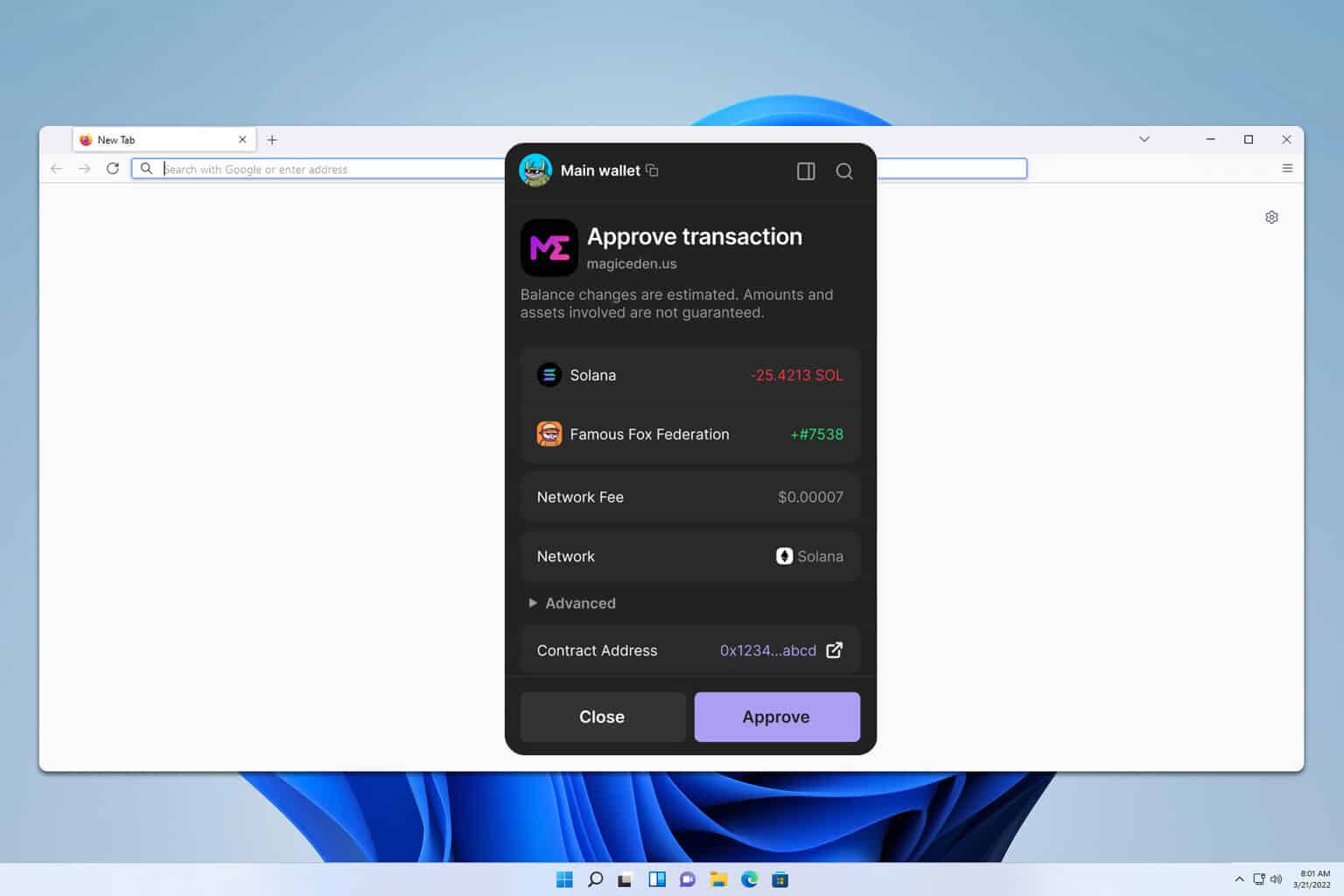
Phantom asks to connect to sites and sign transactions, and you must approve each action.
On one hand that’s great for user control; though actually, some DApps over-request and that can be confusing.
So I started using a dedicated browser profile for DeFi — it keeps my regular browsing separate, reduces leak points, and makes me less likely to approve a sketchy permission mid-scroll.
Here’s the thing.
Phantom integrates a token swap feature directly in the extension.
That built-in swap is convenient for quick trades without leaving the wallet UI, and slippage settings are visible.
But swaps route through aggregators and liquidity pools, so price impact and fees vary depending on the pool depth, time, and network conditions which means you should check the quote carefully before confirming any trade.
Also, there’s a gasless feel to Solana, but transactions still matter — they confirm fast, yet bad transaction decisions happen very fast too.
Whoa!
Security-wise, Phantom gives you a seed phrase and hardware wallet support.
Using a Ledger is straightforward for signing, and it keeps your keys offline.
Initially I thought the extension-only workflow was sufficient, but then realized that hardware support was a must for higher-value holdings.
If you plan to move serious funds or hold high-value NFTs, pairing Phantom with a Ledger or similar device reduces risk significantly because it prevents the extension from signing transactions without your explicit hardware approval.
Really?
Yes — backup is non-negotiable.
Phantom makes you write down the recovery phrase, and you should store that phrase offline in multiple physical locations.
I’m biased, but a laminated copy in a safe plus a secure backup in a different location works for me.
Also, avoid cloud notes or photos of your seed phrase — they leak in ways you can’t always see until it’s too late.
Here’s the thing.
Connecting to DApps is mostly click-and-confirm.
Phantom shows the network and account, and prompts you for signatures.
On the other hand, some DApps request “wallet address” access which is harmless, while others bundle multiple permissions, and that ambiguity is where users mess up and grant more permissions than needed.
So train yourself to read connection dialogs like a contract — skim first for the DApp name, the actions requested, and whether the DApp intends to move funds or only read balances.
Whoa!
Phantom’s NFT UX is nice — browsing and transfers are tidy.
It displays collectibles with previews and metadata when available.
But metadata can be off-chain and mutable, so what you see in the UI isn’t always immutable proof of ownership in the way some people assume; the token ownership is on-chain, but images and descriptions can be hosted elsewhere and can change or go offline.
Understanding that split between on-chain ownership and off-chain media is key, especially if you’re buying for long-term holds or displaying NFTs publicly.
Really?
Yes — and here’s a niggle that bugs me.
Sometimes token labels and icons come from community registries and they’re inconsistent.
That inconsistency can lead to confusion when tokens with similar symbols appear, and quick glance decisions can fail you — double-check contract addresses if anything looks off.
Oh, and by the way, don’t rely solely on the icon; it’s easy very very easy to trust a good-looking interface and then regret it later.
Here’s the thing.
Phantom supports staking SOL directly in-wallet with a list of validators.
You can stake to earn rewards without running a node, and the UI shows estimated APR and validator info.
On one hand staking through the wallet is convenient and reduces friction for new users; on the other hand, validator centralization risk exists, and choosing validators requires a bit of research — check commission rates, uptime histories, and community reputation before delegating large amounts.
Also consider splitting stakes across multiple validators to reduce single-point exposure and to support network decentralization.
Whoa!
Performance is impressive during high traffic times.
Transactions that would clog other chains breeze through on Solana most of the time.
However, network congestion or RPC node issues can still delay confirmations, and sometimes Phantom’s transaction history lags behind the actual chain state which can confuse new users who think a transaction failed when it’s just pending or not yet indexed by the node.
So patience and cross-checking on a block explorer helps when the UI seems out of sync.
Really?
Yes — I actually used a block explorer to confirm a stuck transaction once.
It cleared up the problem and saved me a panic.
Initially I thought the extension would always be the source of truth, but block explorers are a blunt and reliable tool when the wallet UI lags or shows incomplete info.
Make a habit of copying the transaction signature and pasting it into a Solana explorer if anything feels off.
Here’s the thing.
Privacy is mixed when using browser extensions.
Extensions can leak metadata like site connections and timing information, depending on browser privacy settings.
So if privacy matters to you, consider using separate browser profiles, VPNs, and hardware wallets, and be aware that browser fingerprinting still exists even with wallet-level protections in place.
I’m not 100% sure how to fully solve this without more invasive tooling, but small practical steps reduce obvious exposure.
Whoa!
The team behind Phantom listens to community feedback fairly often.
They push updates and integrate popular requests, and that responsiveness matters in a fast-moving ecosystem.
Though actually, fast updates mean occasional regressions and UI churn which can be frustrating if you’re used to a steady interface, so there’s a tradeoff between rapid innovation and stable UX.
Expect occasional change and be ready to relearn small things after an update — it’s part of the ride for early-stage crypto tools.
Really?
Yes — and one last practical tip.
If you use multiple accounts, label them clearly in the wallet and avoid mixing high-value and low-value accounts in the same browser window.
That small habit prevented me from clicking the wrong account when approving a signature in a rush one night — true story, thankfully it was just a small test token, but still… lesson learned.
Also, sometimes I write reminders in the account name like “NO BIG FUNDS” to enforce discipline (a slightly goofy but effective trick).
Here’s the thing.
Phantom is an excellent entry point into Solana DeFi and NFTs for mainstream users.
It balances simplicity with powerful features like staking, swaps, and hardware wallet support.
But it’s not perfect: watch for permission prompts, confirm transactions with care, verify domains before installing extensions, and pair with hardware when security matters most.
Use it, but use it wisely — the convenience is great, but your keys and your habits determine the real security outcome.
Quick Setup Tip and Where to Get It
Okay, so check this out—if you want to add Phantom to your browser, go to the official source and grab the phantom wallet download extension which reduces the risk of fake clones.
I’m biased toward verifying everything twice.
Install, create a password, write down your seed phrase on paper, and then set up a Ledger if you value security.
If you’re only experimenting, use a small test amount first so you learn the flows without risking much.
FAQs
Is Phantom safe for beginners?
Yes, it’s beginner-friendly, though safety depends on your habits; use strong backups, verify sites before connecting, and consider hardware for larger balances.
Can I use Phantom with Ledger?
Absolutely — Ledger support is available and recommended for securing high-value accounts because it keeps private keys offline during transaction signing.
What happens if I lose my seed phrase?
If the seed phrase is lost you lose access to that wallet permanently unless you have another backup; so store it offline and in multiple secure places.
Does Phantom support token swaps?
Yes, Phantom includes a swap interface that aggregates liquidity, but always check slippage and quotes before confirming trades.
